
We offer a nice set of woodies, part number AUD1519, which are inexpensive, fly well, and will do a great job. Heck, even if you're a highly experienced pilot we still advise you keep a set of woodies on hand. And not just for wanting to sell another set of blades but because as a beginner, which would you rather replace following a crash, a set of blades that go for $20, or ones that will set you back $80-100 a pair, or more?
Think I'm kidding? Shop around . . . and I hope you're sitting down!


Pick your poison
As I mentioned, getting a set of woodies – even if you're an experienced pilot – may be smart. Why? Well, as regards experienced pilots, same reason they're good for beginners . . . for the great price. My thesis is this; a good set of woodies are what you prefer for test flights of new models as well as following crash repairs. That, and they perform fine for sport maneuvers – think loops, rolls, inverted, pirouettes, etc.
Point being, these days I'll install woodies following a new build. Why? Because experience has taught me sometimes shit happens! Like beyond the first few flights of a brand new model (when I am more apt to crash due to setup errors), I find a set of woodies are also handy to have on hand for test flights following crash repairs. Like maybe because I missed something. And don't laugh – only God is perfect!
As background, I've been flying model helis since the late 1980s, so I'm not a rookie. Thing is, following a crash repair – because I can be just as much a doofus as the next guy – I've occasionally missed something. Something, which results in my crashing the model again - argh!
No, not fun, but these things happen, so the major part of the argument for using woodies on new model test hops and following crash repairs is I'm only risking 20 bucks. And this holds for pros as well as beginners – but you do you!
If you'll allow me time for a story, you may find profit in it as I share how I came to hold this opinion.
A brief bird walk into times past
So one day, whilst hovering, my model suddenly slammed into the ground (hard enough to break the landing gear, tip over, and experience a boom strike). Cost me a set of carbon fiber blades, too. Honestly, it happened so fast I didn't even realize anything was wrong before bam, it hit. Honestly, I was caught by surprise because nothing seemed amiss, beforehand.
So following the crash repair, next day at the field, I started the model, carried it out to the flight line and lifted into a hover, and bam! Yup, not 30-seconds into the flight, the same damn thing . . . another crash, similar results – and especially aggravating, another set of carbon fiber blades – not cheap!
Then next day, again following repairs, as I was set to start the engine, I noticed juuust touching the tip of the starter probe to the start adapter resulted in a slight glitch. And it was repeatable, so this was an aha-moment – a clue!
Immediately calling it a day, I went through the model more thoroughly. I was principally looking for a crack in something. This, because I'd learned long ago aluminum side frames were prone to generating RF (radio interference) when cracks develop (this due entirely to vibration). Only thing is, with the model possessed of plastic side frames, this surely couldn't be the cause!
Anyway, a bit befuddled, my initial focus was on inspecting the aluminum alloy tail boom, aluminum muffler, and other alloy components . . . and I found nothing! So with nowhere else to go, next, I began exchanging avionics components. Like what else could I do?
I began with the battery, switch, and extensions (because they were easy). No joy, these weren't the cause and the f-ing glitch persisted! Next, I swapped out the receiver (also easy) and still, the glitch persisted! The methodical component exchange continued, next up was the governor (also easy because it sits right on top). And guess what? Same darn thing . . . the glitch was still there!

OK, now we're down to less convenient components – replacing the servos. These are something of a pain, not because exchanging the servo itself is much trouble since four screws means it goes in and out easy enough, but because each servo has to be subtrimmed to neutral. No, not difficult but fiddly.
Worse, and to be honest, I couldn't imagine what within a servo could result in a glitch! Like you have to understand, servos are stupid. The lead has three wires, a (+) orange, a (-) brown, and signal (yellow). But no brains inside meaning nothing that can possibly generate a signal to move! That, and all the servos were glitching at the same time. Anyway, while I didn't have much hope, in desperation (there was nothing left), I swapped them out anyway . . . and the glitch continued.
Frustrated, the next day (a Saturday), my helicopter club was descending en mass at a field west of me for an informal fun fly with a bandit club in the area (bandit meaning not an AMA field). Like, I really wanted to attend – but – I also knew I couldn't fly this model. Hobson's choice meant prepping my back-up model and thus, I went anyway. Took this one, also, just in case I could suss out the issue with help.
Once there, I spotted Rodney Shatera (now deceased, but a really good guy). So I shared with him what had been going on and asked if he'd mind looking it over as a fresh set of eyes. As I kept on regarding what I'd already done, he held up a finger and said, 'Leave it with me.'
Without another word, I shut up, turned on my heel and wandered off to visit with others (and run my mouth). This, because yakking and catching up is the real purpose of a fun fly as far as I'm concerned.
Short while later, up walks Rodney with a Hall-effect sensor dangling from his fingers. Said, 'It's the pick up!' to which in disbelief I exclaimed? No way, how on Earth could this be? Are you seriously telling me a Hall effect sensor, which is totally passive (and has a plastic body) is the proximiate cause? Dunno, he said, but it is.
Proof being after he unplugged it, the servos quit glitching. And the nail in the coffin being, he had a spare pickup in his goody box, and had installed it. No more glitch and I could test fly the model. We did and it was fine. End of story? Not quite.
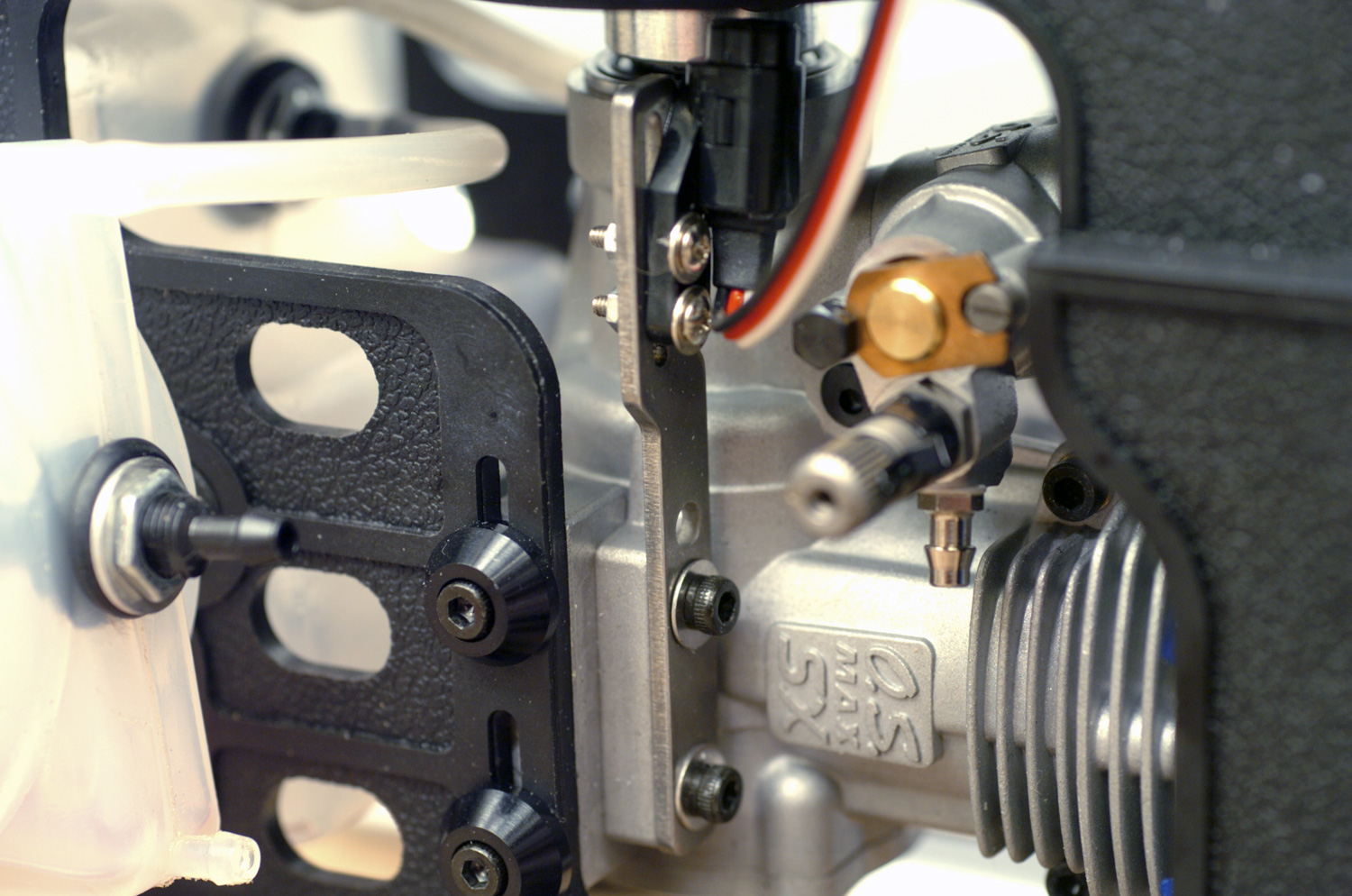
So the point of this story is; we did that test flight with a set of woodies (because I'm slow, not stupid). Basically, I had no intention of risking another set of carbon fiber blades, and it's this, which is the purpose of relating these events!
Note; this story goes back close to 20 years, and I 'still' have that set of woodies. I take good care of them, too. Like after use, I wipe them down carefully and stash them in their own separate case. I've probably used them 10-20 times in the intervening years (and not just for my model, but for that of other folks', too).
Recapping
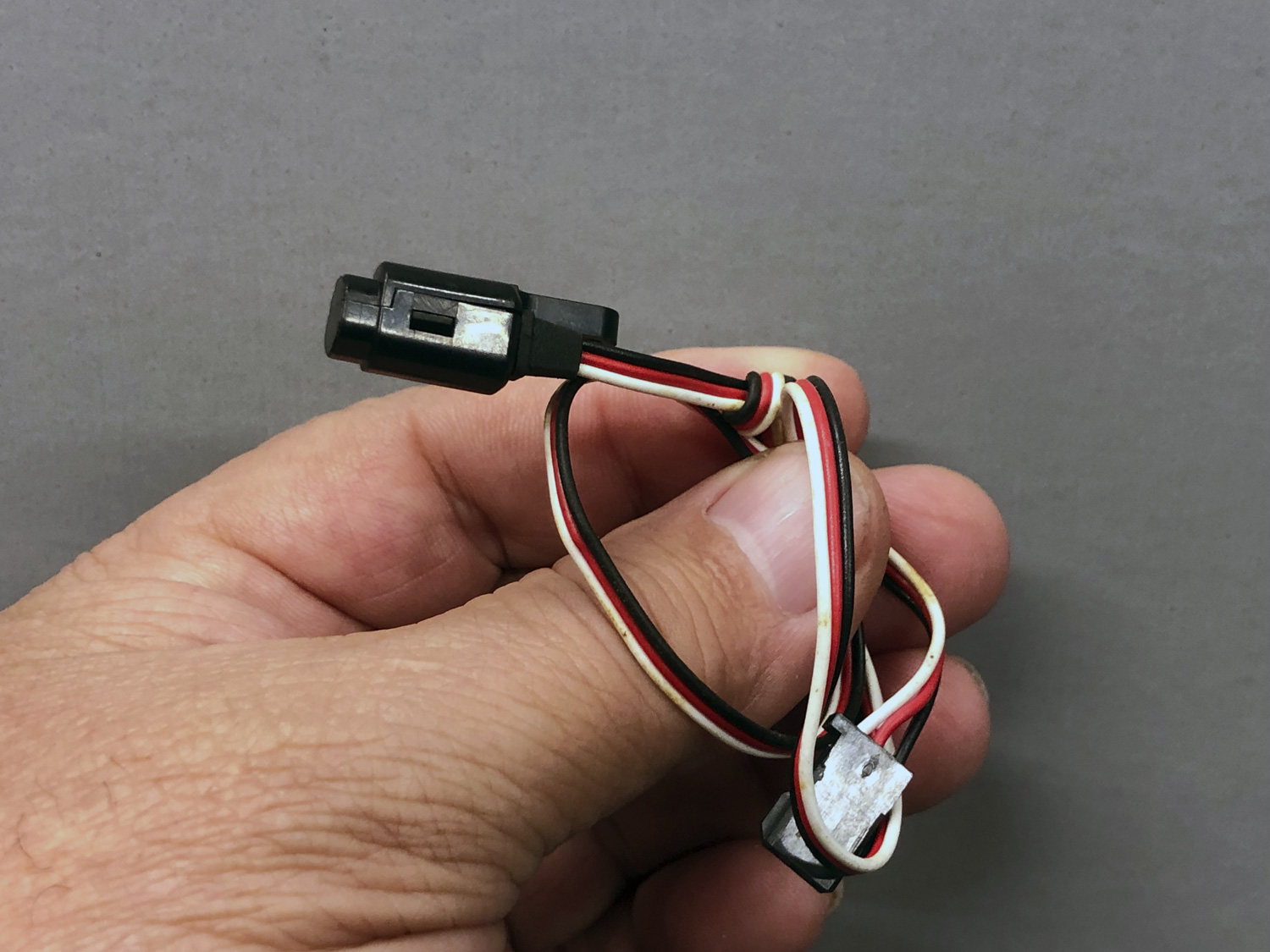
Bottom line? Shit happens! So in my case, the proximate cause for crashing my model twice was a glitch due to a totally passive Hall-effect sensor (the pickup for the governor). This, being a widget, which in my hubris I had neglected to exchange, and not because I overlooked it, but because I knew it was passive and couldn't possibly be the source of problem. Wrong!
What's more, I still have it (with overhand knot in the lead so I don't inadvertently reuse it). To this day, I occasionally trot it out when I share this story with a friend.
Note; world championships in F3C aerobatics have been won with woodies (carefully fiberglassed and balanced, of course). Heck, truth be told, the whole reason fiberglass and carbon fiber blades came into being is because glassing and balancing wood blades is a lot of work because otherwise, there's absolutely nothing wrong with how wood blades fly.
Wrapping up
By the way, I have several customers who are also model airplane builders. They buy these things (cheap woodies) a half-dozen at a time, strip off the heat shrink covering and glass the blades (yes, all of them at once). They'll do one side on the first day, flip them over and do the other side, the next day. On the third day (obviously not spending all day doing this, basically waiting on things to cure/dry, so maybe a half-hour at a time), they'll shoot primer. Primer dries fast so maybe they also perform a preliminary balance. Then on the fourth day, they shoot paint.
Then about a week later, maybe two, they spend some quality time with rubbing compound following which, they'll do a final balance, wax the blades and Bob's your uncle! End result, for the price of one set of carbon blades they end up with a half dozen blade sets whose performance and appearances are indistinguishable from $100 man-made blade sets! Food for thought if you're a modeler who knows his way around wood and fiberglassing.
Finally, if you prefer man-made blades, we have fiberglass composite AUD0074-602, as well as the same blade in carbon fiber, part number AUD0075-602, plus AUD0075-610, which are also carbon fiber, the yellow ones in the article hero photo.


